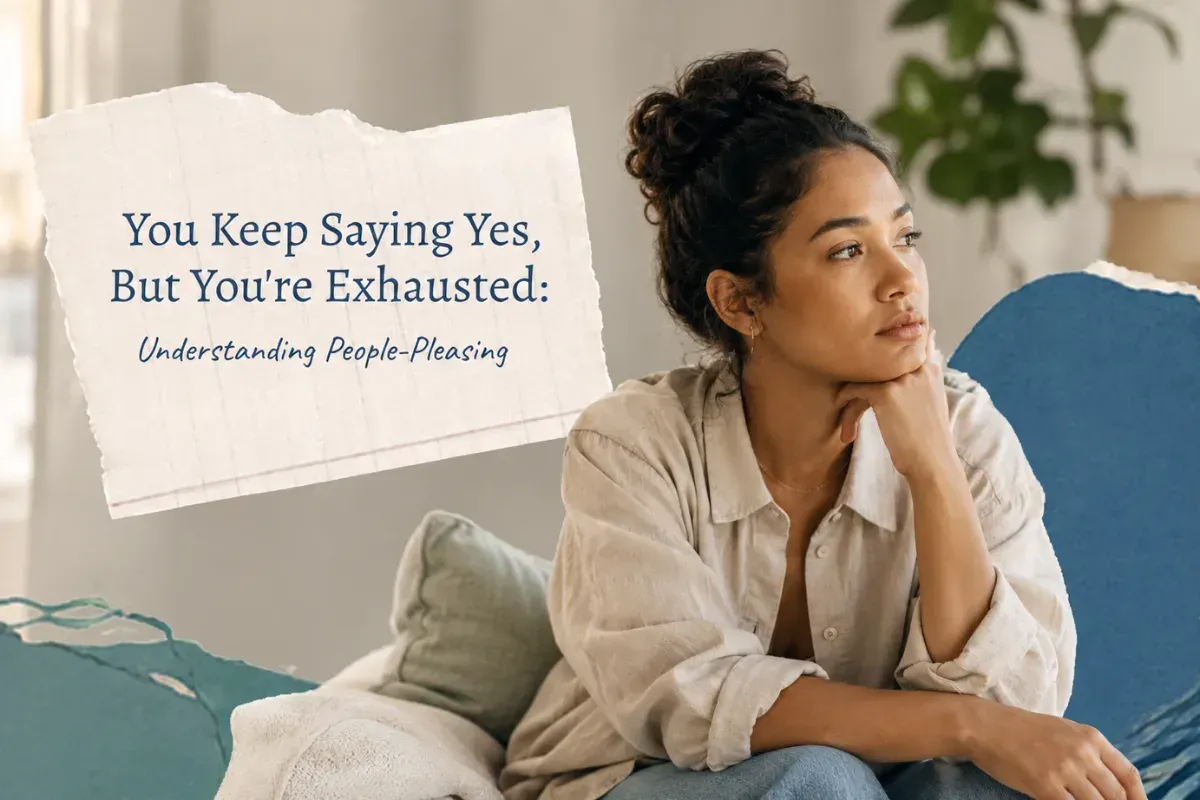
You know that feeling. Someone asks you a favor, and before your brain even processes the request, your mouth has already said yes. Your body, meanwhile, is doing something entirely different: shoulders tightening, stomach dropping, a quiet exhaustion settling in before you've even started. That gap between what you said and what you actually wanted to say? That gap is trying to tell you something.
According to a 2022 YouGov survey, 49% of U.S. adults identify as people-pleasers, and 93% said they engage in at least one people-pleasing behavior somewhat or very often. So if this pattern sounds familiar, you are genuinely not alone. You don't people-please because you're broken. You do it because it made sense to learn it. The goal of this blog is to help you better understand the pattern clearly, understand where it came from, and give you a real 30-day plan to start changing it.
What chronic people-pleasing actually looks like (and why it isn't just being nice)
There's a difference between saying yes because you genuinely want to and saying yes because saying no feels dangerous or like you'll lose favor, belonging, or acceptance. That distinction is everything. The behavior might look identical from the outside, but underneath,
one is driven by generosity and the other is driven by some kind of fear: fear of rejection, fear of conflict, fear that disapproval means something catastrophic about your worth.
Maybe you routinely agree to things when you're already overloaded. You apologize automatically, sometimes before anyone has even expressed frustration. And perhaps most telling:
when someone asks what you want, you genuinely don't know, because
you've spent so much energy tracking everyone else's preferences that your own have gone quiet.
Occasionally accommodating others is normal and human. The line into chronic territory is crossed when the pattern is persistent, fear-driven, and costly.
If being agreeable is regularly costing you your time, your sense of self, your honest opinions, or your well-being, it has moved past politeness. It has become a pattern worth understanding.
The emotional toll of always putting others first
Here's the painful paradox at the center of chronic people-pleasing:
you can be liked by everyone and known by no one, including yourself. The giving feels good at first. Over time, though, the gap between what you give and what you receive quietly fills with resentment. You feel taken advantage of, but you keep saying yes. You feel invisible, but you keep making yourself smaller. The exhaustion that accumulates isn't laziness. It's the cost of consistently showing up for everyone except yourself.
Five honest questions worth sitting with
Once you recognize your own struggle with people-pleasing, it's all about noticing when the urge to do it comes up and getting curious. In therapy, we'll dive deep into questions just like this to help you understand your people-pleasing tendencies at a deeper level and equip you with other ways of responding instead.
Try sitting with these five questions and noticing what comes up.
- When did I notice myself wanting to make someone else happy today?
- What was happening right before I felt that urge?
- What did I imagine the other person needed from me?
- When I said, 'yes' what was I hoping would happen?
- What do I need right now, in this moment?
Seeing your people-pleasing tendencies clearly is already doing something. The discomfort of recognizing yourself honestly in these questions isn't a bad sign, it's actually a sign of readiness to do something different.
If you're interested in learning how to live more honestly and authentically and want to respond differently to others without resentment, burnout or anxiety, then contact me today. Start with the free consultation and we'll get you the clarity and inner peace you're searching for.